
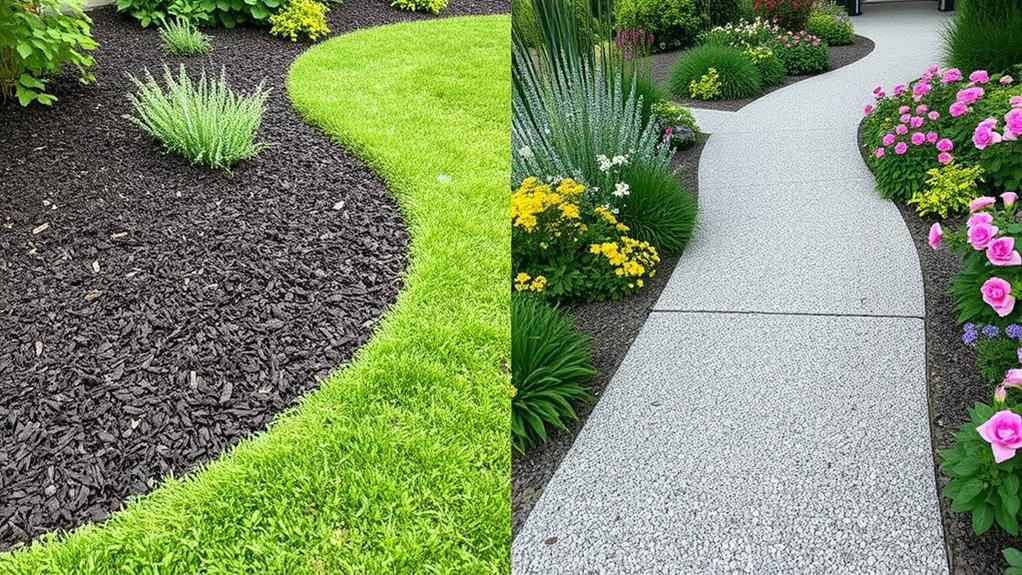
When it comes to deciding between mulch and pea gravel, you're likely weighing the pros and cons of each. You've probably considered how mulch can enrich your soil and suppress weeds, but you might be concerned about its tendency to attract pests and require frequent replenishment. On the other hand, pea gravel's durability and low-maintenance appeal might be enticing, but you're unsure about its rough texture and lack of nutritional benefits. As you ponder these factors, you're left wondering: which option is truly the better choice for your outdoor space?
The Mulch Advantage
You've likely noticed how mulch can instantly elevate the appearance of your garden or yard. But that's not all it does. Mulch is a game-changer when it comes to soil health and plant growth. When you use organic mulch, like wood chips or bark, it breaks down over time and adds nutrients to the soil. This creates a fertile environment that encourages healthy plant growth and development. Additionally, mulch helps retain moisture in the soil, reducing the need for frequent watering. It also suppresses weeds, which compete with your plants for resources. As the mulch decomposes, it cools the soil, reducing soil temperature and preventing heat stress in plants. With all these benefits, it's no wonder why many gardeners swear by mulch as a essential component of their garden care routine. By choosing organic mulch, you're not only beautifying your outdoor space but also creating a thriving ecosystem.
Pea Gravel Benefits and Drawbacks
As you ponder pea gravel for your landscaping project, you'll want to weigh its benefits and drawbacks. On the plus side, pea gravel is a low-maintenance option that won't decompose or decay, and it comes in various colors and textures to suit your aesthetic needs. However, you'll need to ponder its potential drawbacks, such as the need for proper edging and its rough texture, before making a decision.
Pea Gravel Options
Pea gravel offers a distinct set of benefits and drawbacks that can make or break its suitability for your landscaping project. As an inorganic mulching compound, pea gravel blocks out sun rays and prevents moisture evaporation, making it suitable for plants that prefer drier conditions. Additionally, it promotes healthy drainage, slowly percolating water back into the soil and ground supply, which can be beneficial for areas with heavy rainfall.
However, pea gravel comes with some drawbacks. It's more expensive than mulch and requires edging to prevent it from spreading to other areas, which can be a drawback for some users. The installation process can also be more difficult than mulch installation, requiring more labor and materials, which can increase overall costs. On the other hand, pea gravel is durable and requires low maintenance, eliminating the need for regular replacement and making it a low-maintenance option for landscaping projects.
Pea Gravel Maintenance
While pea gravel is a low-maintenance option, it still requires some upkeep to maintain its appearance and functionality. You'll need to edge your pea gravel regularly to prevent it from spreading to other areas, which can be time-consuming and costly. Additionally, installation can be more difficult than mulch due to its weight and density, making it harder to spread evenly.
In terms of maintenance, pea gravel doesn't decompose or decay, eliminating the need for regular replacement. However, it still requires occasional replenishment to maintain its appearance. You'll need to remove weeds and leaf litter, rake to maintain the desired depth, and top it with a new layer every few years. This process can cost around $70-$80 per yard. Keep in mind that pea gravel can retain heat in the sun, making it uncomfortable to walk on in warm weather, and it can also be rough on bare feet. By understanding these maintenance requirements, you can decide if pea gravel is the right choice for your outdoor space.
Pea Gravel Aesthetics
Your outdoor space's aesthetic appeal can greatly benefit from pea gravel's versatility in color and texture. With a range of options available, you can choose a pea gravel that complements your landscaping project's unique style. The small stones in pea gravel can be raked to create decorative patterns and designs, adding visual interest to outdoor spaces. Plus, its neutral color palette makes it a versatile choice that can complement a wide range of plant species and hardscaping materials.
In comparison to mulch, pea gravel's inorganic nature means it won't decompose or rot, maintaining its appearance over time with minimal maintenance. This durability also allows it to withstand heavy foot traffic and harsh weather conditions, making it an ideal choice for high-traffic areas. When considering pea gravel vs mulch, pea gravel's aesthetic benefits are undeniable. Its ability to add texture, color, and visual interest to your outdoor space makes it a great option for those looking to elevate their landscaping.
Choosing the Right Ground Cover
Many homeowners face a common dilemma: selecting the perfect ground cover for their outdoor spaces. You're not alone in this struggle, and it's crucial to ponder a few key factors before making a decision.
First, think about the purpose of your outdoor space. Do you want to create a beautiful garden, or is it more functional, like a walkway or patio? This will help you determine the type of ground cover you need. For example, if you're looking to suppress weeds and add a decorative touch, mulch or pea gravel might be a good choice. On the other hand, if you want to create a lush, green area, you might opt for a living ground cover like clover or thyme.
Next, weigh the climate and maintenance requirements for your chosen ground cover. Some options, like mulch, need to be replenished regularly, while others, like pea gravel, require minimal upkeep. Finally, think about your personal style and the overall aesthetic you want to achieve in your outdoor space. By taking these factors into account, you'll be well on your way to selecting the perfect ground cover for your unique needs.
Mulch Vs Pea Gravel Comparison
Between mulch and pea gravel, two popular ground cover options, lies a world of difference in terms of functionality, maintenance, and visual appeal. When you're deciding between mulch vs pea gravel, consider their distinct characteristics. Mulch is an organic material that breaks down over time, providing nutrients to the soil and plants. It's ideal for garden beds and areas with heavy plant growth. On the other hand, pea gravel is an inorganic material that doesn't decompose and provides excellent drainage. It's perfect for pathways, walkways, and areas with low plant growth.
In terms of maintenance, mulch requires regular replenishment as it decomposes, while pea gravel needs occasional raking to maintain its even surface. You'll also notice a difference in their texture and feel. Mulch can be soft and spongy, while pea gravel is crunchy and firm underfoot. Additionally, mulch can attract pests and create hiding spots, whereas pea gravel's open structure deters pests and allows for easy weed removal. By understanding these key differences, you'll be better equipped to choose the right ground cover for your specific needs and preferences.
Considering Aesthetics and Functionality
When deciding on a ground cover, the aesthetic and functional aspects of mulch and pea gravel are crucial to ponder. You might wonder, which one will enhance the beauty of your outdoor space? Organic mulches, like wood chips or bark, can add a natural, earthy look to your garden or yard. They come in various colors and textures, allowing you to choose the one that complements your landscape. On the other hand, pea gravel provides a clean, modern appearance that can be especially appealing in contemporary designs.
From a functional standpoint, both options have their benefits. Mulch helps retain moisture in the soil, suppresses weeds, and regulates soil temperature. Pea gravel, with its excellent drainage properties, is ideal for areas with heavy rainfall or where water tends to collect. Additionally, pea gravel is more durable and requires less maintenance than mulch. Considering your personal preferences and the specific needs of your outdoor space, you'll want to weigh these aesthetic and functional factors carefully to make the best choice between mulch and pea gravel.
Making an Informed Decision
You've weighed the pros and cons of mulch and considered how pea gravel compares. Now, it's time to think critically about your specific needs and priorities. By examining the advantages and disadvantages of each option, you'll make an informed decision that suits your landscape and lifestyle.
Mulch Pros and Cons
Considering your landscaping goals, weighing the pros and cons of mulch is crucial to making an informed decision. You want to guarantee that the choice you make complements your outdoor space and meets your needs.
When it comes to mulch pros and cons, careful deliberation is key. On the plus side, mulch helps retain moisture in the soil, suppresses weed growth, and regulates soil temperature. It also adds an aesthetic appeal to your garden beds, coming in a variety of colors and textures. Additionally, mulch breaks down over time, providing nutrients to the soil.
However, there are some drawbacks to ponder. Mulch can attract pests, and it may need to be replenished regularly. It can also acidify the soil if not properly maintained. Moreover, some types of mulch can be expensive, and it may not be suitable for areas with high foot traffic. By understanding the mulch pros and cons, you'll be better equipped to decide if it's the right choice for your landscaping project.
Pea Gravel Comparison
Now that you've weighed the pros and cons of mulch, it's vital to compare it to pea gravel, a popular alternative that offers a distinct set of benefits and drawbacks. Pea gravel is a durable and low-maintenance option that doesn't decompose or decay, eliminating the need for regular replacement. However, it can be more expensive than mulch and requires edging to prevent it from spreading to other areas.
On the plus side, pea gravel promotes healthy drainage, slowly percolating water back into the soil and ground supply, making it suitable for areas with heavy rainfall or waterlogging issues. Unlike mulch, pea gravel doesn't retain heat in the sun, making it a better option for areas with high temperatures. It's also suitable for areas with high foot traffic. Additionally, pea gravel comes in a variety of colors and textures, offering a range of aesthetic options. However, it can be rough to walk on without shoes and may not be suitable for playgrounds or areas requiring ADA compliance.
Frequently Asked Questions
Should I Use Pea Gravel or Mulch?
You're deciding between pea gravel and mulch, and it's a tough call. You're weighing pros and cons, but here's the deal: if you want a low-maintenance, weed-free option that drains well, pea gravel's your best bet.
What Are the Disadvantages of Pea Gravel?
You'll find that pea gravel has several downsides, including its tendency to spread everywhere, mix with soil when weeds grow, and make windborne weed seeds take root, all of which lead to high maintenance and frequent cleaning.
Is Gravel Cheaper Than Mulch?
You're wondering if gravel is cheaper than mulch, and the answer is, it's not that simple; while pea gravel can be more expensive upfront, its long lifespan makes it a cost-effective option in the long run, depending on the type of mulch you're comparing it to.
Is Gravel or Mulch Better for Drainage?
You're deciding between gravel and mulch for your garden, and you're wondering which one's better for drainage. Well, gravel's porous nature allows for better water penetration and airflow, reducing waterlogged soil and associated problems.


